📇 Free Flashcard Maker
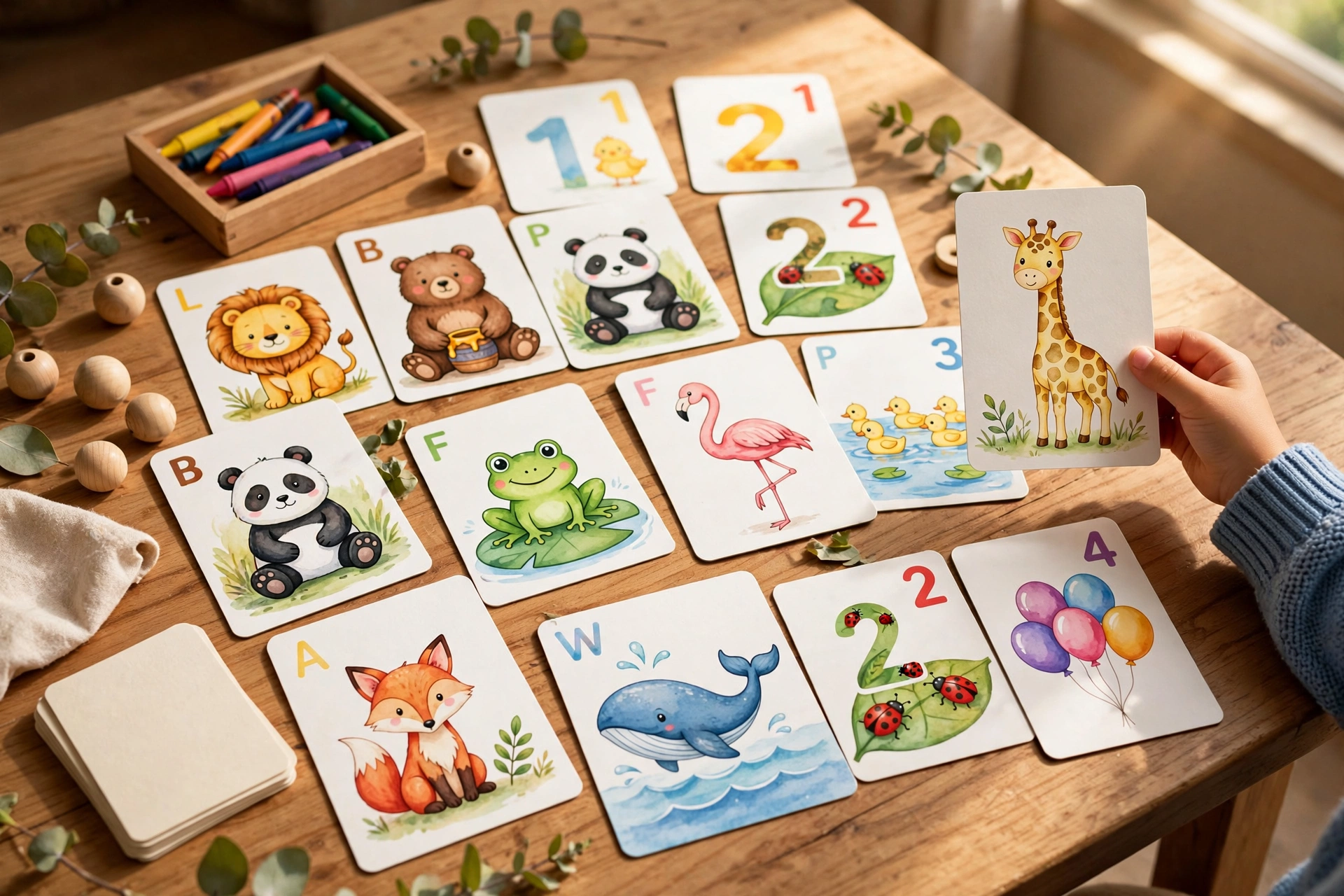
Flashcards are one of the most effective study tools ever invented — when they're made right. The problem is the making: handwriting forty cards the night before a test is nobody's idea of a good time, and pre-made decks never quite match what your kid is actually studying. This maker closes the gap: type your terms and definitions once, print a clean set, cut along the lines, and you're studying in five minutes.
Here's how to use it. Type one flashcard per line in the box, in the format TERM | definition — for example, "Photosynthesis | Plants convert sunlight into food." The part before the | goes on the front of the card (the prompt), and the part after goes on the back (the answer). Keep each side to one idea: one term, one definition. If an answer takes more than a breath to say, split it into two cards — small cards learn faster than crowded ones. Hit "Make Flashcards," print, and cut each card apart (or fold — the front/back layout works either way).
Now the important part: using them right. The golden rule is to say the answer out loud before flipping — every time. Glancing at the front and flipping immediately feels like studying, but it's just reading; the learning happens in the effort of pulling the answer from memory. Shuffle between rounds so you're learning the content, not the order. Sort into "know" and "don't know" piles and drill the misses twice. And spread sessions across days rather than cramming — three short sessions beat one long one every time. Our full guide to flashcards that actually work covers all seven rules in detail.
Teachers: generate class sets for vocabulary units and keep them in labeled baggies for station work — or better yet, have students type their own sets, since making the card is the first study session. Parents: this is your test-week secret weapon; fifteen minutes with a fresh set the night before, plus a quick morning review, beats an hour of rereading notes. Print on cardstock if the set needs to survive the semester, or plain paper for one-week wonders.
Make your flashcards
Tip: keep each card to one idea. Cut along the card borders — front on top, answer below.
Frequently Asked Questions
How should I format my terms?
One flashcard per line, like this: TERM | definition. Everything before the | goes on the front (the question side), everything after goes on the back (the answer side).
How many cards can I make at once?
As many as you like — the tool handles big sets fine. For studying, though, 20–30 cards per set is the sweet spot; bigger sets are better split into two.
What's the best way to study with flashcards?
Say the answer out loud before flipping, shuffle between rounds, sort into know/don't-know piles, and space sessions across days. Our guide to flashcards that actually work has the full method.
Should I print on cardstock?
For sets you'll reuse all semester, yes — cardstock survives handling far better. For a one-week test prep set, regular paper is fine (and cheaper).
Can students make their own sets?
Please do — making the card is the first study session. Deciding what goes on front vs. back forces exactly the kind of thinking that builds memory.